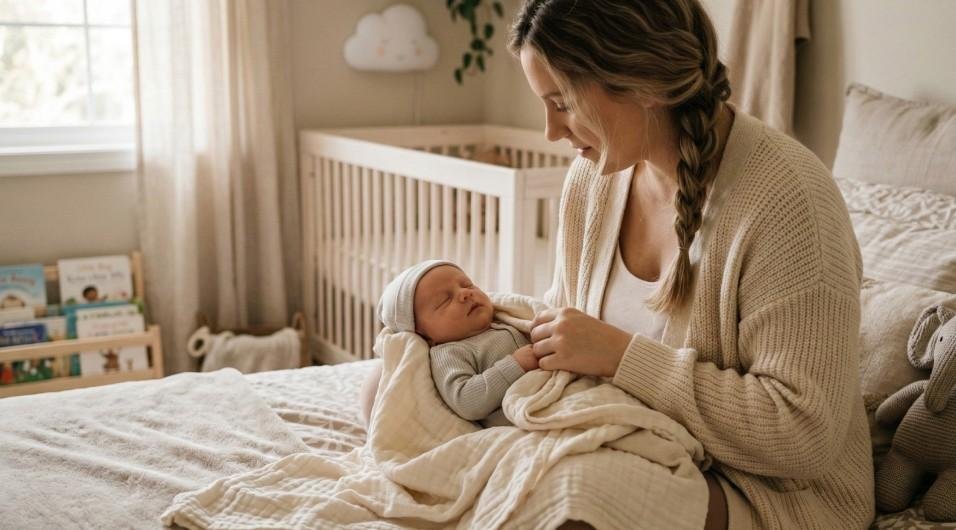
The first time I tried swaddling a newborn, I honestly thought it would be easy. I wrapped the blanket confidently, stepped back proudly, and within seconds the baby had kicked free like a tiny magician escaping a trick. That moment pushed me to properly learn how to swaddle a baby so the baby stayed calm, cozy, and safe.
Swaddling has been used for generations because it helps newborns feel secure by recreating the snug environment of the womb. It also prevents the startle reflex from waking them suddenly. Once I understood the technique and safety guidelines, how to swaddle a baby became one of the most helpful skills for calming babies and improving sleep routines.
Why Do Parents Learn How to Swaddle a Baby?
Comfort and womb-like security
Newborns spend months in a tight, cozy space before birth. When they enter the outside world, the sudden freedom of movement can feel overwhelming. Learning how to swaddle a baby helps recreate the comforting pressure they were used to in the womb.
When a baby feels gently wrapped, their body relaxes more easily. Many babies stop fussing quickly because the swaddle provides a sense of security. Parents often notice that swaddled babies settle faster and fall asleep more peacefully.
Preventing the startle reflex
Another reason parents practice how to swaddle a baby is to control the Moro reflex, commonly known as the startle reflex. Newborns often fling their arms outward suddenly, which can wake them during sleep.
A snug swaddle keeps the arms gently secured near the body. This reduces sudden movements that interrupt sleep, helping babies stay asleep longer during naps and nighttime.
What Makes Swaddling Safe and Comfortable?
The importance of proper snugness
A good swaddle should feel snug around the baby’s chest and arms without restricting breathing. The blanket should hold the arms close to the body so the baby cannot easily break free.
However, the swaddle should never be tight around the chest. Experts recommend using the two or three finger rule. If you can slide two to three fingers between the blanket and your baby’s chest, the swaddle is usually safe and comfortable.
Allowing healthy hip movement
When learning how to swaddle a baby, parents sometimes wrap the legs too tightly. This can restrict natural hip movement and may increase the risk of hip dysplasia. A healthy swaddle allows the baby’s hips and knees to bend naturally in a frog-like position. Babies should be able to kick and move their legs comfortably inside the blanket.
How to Swaddle a Baby Step by Step
Prepare the Base
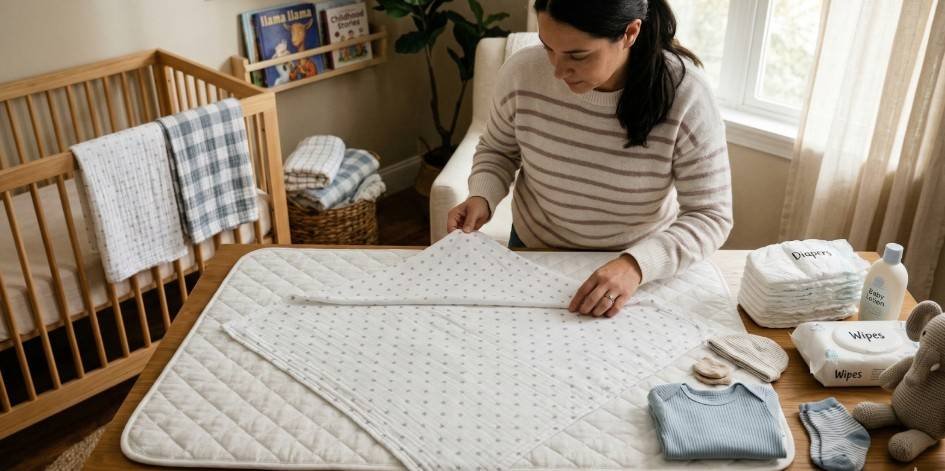
The first step in learning how to swaddle a baby is preparing the blanket correctly. Lay a thin square blanket on a flat surface and position it in a diamond shape. Fold the top corner downward about four to six inches to create a straight edge. This folded edge will support the baby’s shoulders and help keep the blanket secure during wrapping.
Position the Baby
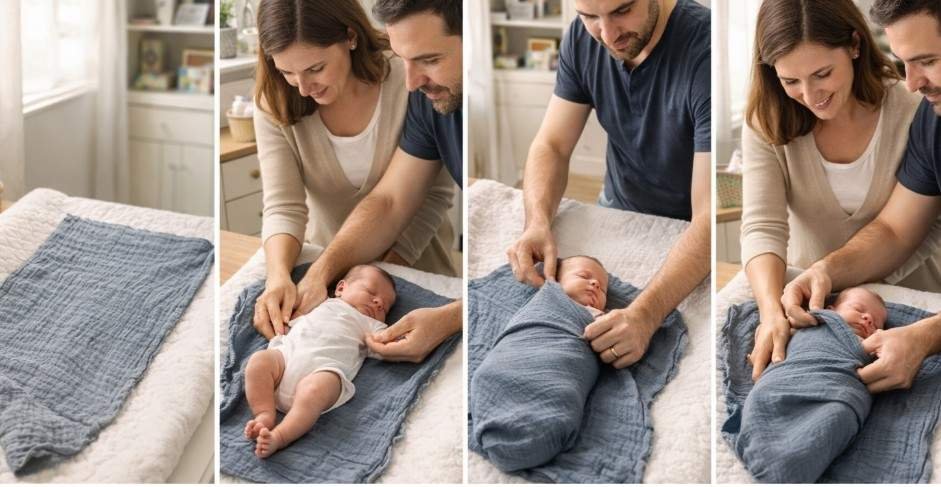
Place the baby face up on the blanket with their neck aligned along the folded edge. Their shoulders should rest just below the fold while their head remains completely uncovered. Keeping the head and neck free is essential for safe swaddling. The blanket should never cover the baby’s face or head during sleep.
The First Wrap
Hold the baby’s left arm gently at their side or slightly bent across the chest. Pull the left corner of the blanket over the arm and across the baby’s body. Tuck the blanket securely beneath the baby’s right side or back. This first wrap holds the arm in place and forms the base of the swaddle.
Secure the Bottom

Next, bring the bottom corner of the blanket upward over the baby’s feet. Leave enough room so the legs can bend naturally and move freely. Tuck the corner loosely behind the baby. This step keeps the lower body covered while still allowing healthy hip movement.
The Final Wrap
Place the baby’s right arm alongside their body and pull the remaining blanket corner across the chest. Wrap it firmly but gently across the body. Tuck the corner securely behind the baby’s left side. Once completed, the swaddle should feel snug around the arms while allowing comfortable movement in the legs.
Critical Safety Guidelines for Swaddling
Check snugness and breathing comfort
A safe swaddle should never restrict breathing. Always check that you can slide two to three fingers between the blanket and the baby’s chest. If the swaddle feels too tight or the baby appears uncomfortable, loosen the wrap slightly. Proper snugness ensures the baby stays secure without pressure on the chest.
Protect healthy hip development
Healthy hip positioning is extremely important when learning how to swaddle a baby. The blanket should never hold the legs straight or force them downward. Instead, babies should be able to bend their knees and spread their legs naturally. This frog-like posture protects hip development and prevents unnecessary joint strain.
Always follow safe sleep positioning
A swaddled baby should always be placed on their back to sleep. Sleeping on the stomach or side increases the risk of breathing problems. Parents should also use breathable fabrics like muslin or cotton. If a baby shows signs of overheating such as sweating, damp hair, or flushed cheeks, the swaddle may be too warm.
When Should You Stop Swaddling a Baby?
Recognizing the rolling milestone
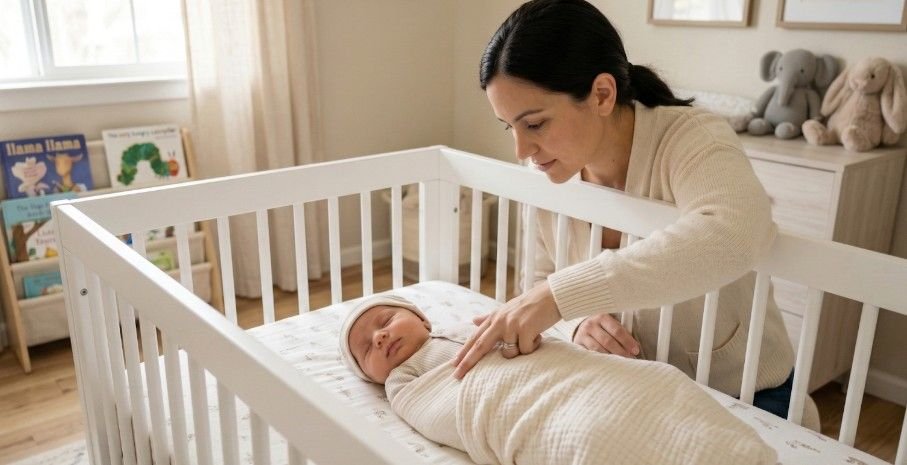
One of the most important safety rules about how to swaddle a baby involves knowing when to stop. Swaddling should end as soon as the baby shows signs of rolling over. This milestone usually appears between two and four months of age. Once babies start attempting to roll, they need their arms free to move safely during sleep.
Transitioning away from swaddles
Some babies adjust quickly when swaddling ends, while others need a gradual transition. Parents sometimes start by leaving one arm out of the swaddle for a few nights. Sleep sacks or wearable blankets are also popular alternatives. These options provide warmth and comfort while allowing full arm movement for safe sleep.
Frequently Asked Questions
1. Is swaddling safe for every newborn?
Swaddling is generally safe for healthy newborns when done correctly. The baby must always sleep on their back and the swaddle must allow free hip movement. Parents should stop swaddling once the baby begins trying to roll over.
2. How tight should a swaddle be around the chest?
A swaddle should be snug but not restrictive. The two or three finger rule works well. If you can slide two or three fingers between the blanket and the baby’s chest, the baby can breathe comfortably while still feeling secure.
3. What if my baby keeps escaping the swaddle?
Some babies are strong little wigglers and escape loose wraps. Try adjusting the snugness around the arms and chest. A slightly firmer wrap often prevents escape while still allowing comfortable movement of the hips and legs.
4. Can babies overheat while swaddled?
Yes, overheating can occur if blankets are too thick or the room is warm. Use lightweight breathable fabrics like muslin and monitor the baby for sweating or flushed cheeks. Keeping the baby comfortably warm but not hot is the safest approach.
How to Swaddle your Little One
Learning how to swaddle a baby may feel tricky during the first few attempts, but it quickly becomes a valuable skill for soothing newborns. A properly wrapped swaddle helps babies feel secure, reduces sudden startle movements, and encourages better sleep patterns.
The key is balancing comfort with safety. Keep the arms snug, allow the hips to move naturally, and always place a swaddled baby on their back for sleep.