
I still laugh when I remember the afternoon my neighbor’s daughter tried to describe a dinosaur as “really really really big.” She paused for a moment, looked at me, and finally said, “Wait… I think the word is gigantic!” That tiny moment showed me how exciting language discovery can be for children.
Moments like that inspired me to explore better vocabulary building activities for kids that feel natural instead of forced. Kids rarely enjoy memorizing long word lists. They learn faster when they play with language, hear words in stories, and use them in everyday conversations.
Research shows that building a strong vocabulary is a journey of repeated exposure and active engagement. Children often need to hear or see a new word in context many times before it truly becomes part of their vocabulary. The most effective vocabulary building activities for kids combine playful exploration with real-world experiences so that words become meaningful and memorable.
Why Are Vocabulary Building Activities for Kids Important?
A strong vocabulary helps children communicate clearly and understand the world around them. When kids learn new words regularly, they become better readers, writers, and problem solvers. Vocabulary growth also supports academic success. Children with a wide vocabulary can understand instructions more easily and express their thoughts with confidence.
Most importantly, vocabulary learning should feel enjoyable. Well-designed vocabulary building activities for kids encourage curiosity and make language learning feel like a game rather than a lesson.
Active Learning Games Make Vocabulary Building Activities for Kids Effective
Vocabulary charades and drawing games
Games like vocabulary charades or Pictionary help children connect words to actions and images. When a child acts out or draws a word without speaking, they learn to understand the word through visual or physical cues.
This approach strengthens memory because kids associate words with experiences. Acting out words such as “whisper,” “leap,” or “giggle” makes vocabulary learning active and memorable.
Vocabulary bingo and guessing games
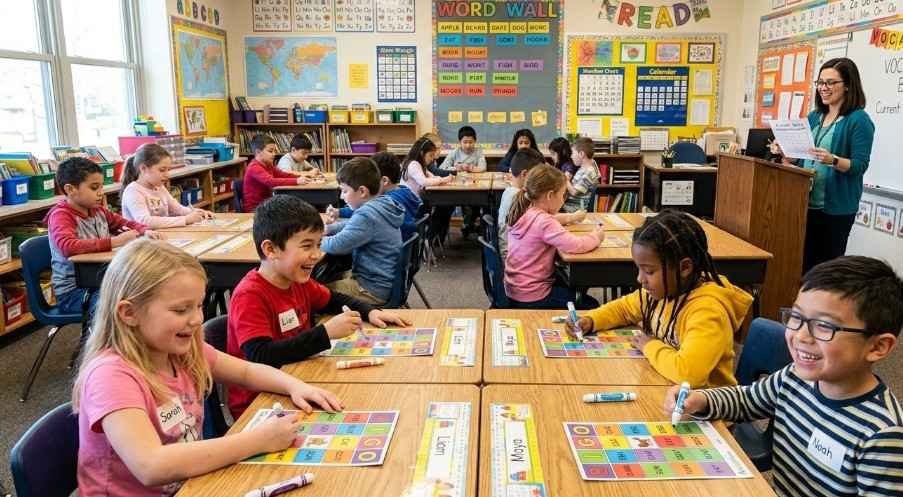
Vocabulary bingo is another playful way to reinforce language skills. Instead of numbers, bingo cards contain vocabulary words. A parent or teacher reads definitions aloud, and children identify the matching words.
Guessing games like “Who am I?” also work well. A child places a word on their forehead and asks yes or no questions to discover what the word represents. These interactive activities make vocabulary building activities for kids exciting and engaging.
Word scavenger hunts and label games
A word scavenger hunt turns everyday environments into learning spaces. Children search for words on labels, signs, or objects around them. This helps them understand how vocabulary appears in real life.
Sticky note labeling works similarly. Write the names of household items on sticky notes and ask kids to match them with objects. This simple activity reinforces word recognition through visual association.
Daily Habits To Strengthen Vocabulary Building Activities for Kids
The word of the day challenge
Introducing a “Word of the Day” creates daily language awareness. Choose one new word each morning and encourage everyone in the family to use it during conversations.
Kids enjoy turning this into a friendly challenge. Each time someone uses the word correctly, they earn points or small rewards. This playful competition encourages repeated practice.
Rich read aloud sessions
Reading aloud is one of the most powerful vocabulary tools. When you pause during a story to discuss interesting words, children learn to interpret meaning through context.

Ask children what they think the word means based on the story. After hearing their guess, provide a simple explanation and encourage them to use the word later in conversation.
Narrated everyday activities
Daily routines offer endless vocabulary opportunities. While cooking, cleaning, or grocery shopping, describe objects and actions with descriptive words.
For example, you might say a kiwi feels fuzzy or describe bread as crispy. These natural conversations strengthen vocabulary building activities for kids by connecting words to real experiences.
Creative Activities Improve Vocabulary Building Activities for Kids
To build a child’s vocabulary, their creative senses must also be explored. These also help build parent-child relationship:

Personalized picture dictionaries
Children love creating their own picture dictionaries. Each page focuses on one new word. Kids write the word, add a simple definition, and draw a picture representing the meaning. This process encourages deeper understanding. By combining writing and illustration, children engage both language and creativity while building their vocabulary.
Word maps and visual connections
Word maps help kids explore connections between related words. Place a new vocabulary word in the center of a page and create branches for synonyms, examples, or related ideas. Visual mapping strengthens understanding because children see how words relate to one another. It also encourages them to think critically about language.
Acrostic poems and shades of meaning
Creative writing activities allow children to explore vocabulary in unique ways. Acrostic poems use the letters of a word to begin each line of a poem describing its meaning.
Another effective activity is “shades of meaning.” Write a group of related words ranging from mild to strong, such as cool, cold, freezing, and frigid. This teaches children how similar words can carry slightly different meanings.
Implementing Vocabulary Building Activities for Kids Step by Step
Start by selecting a small group of new words each week. Choose words from books, conversations, or classroom lessons so they connect to real experiences. Introduce the words naturally during conversations rather than presenting them as a formal lesson.
Next, incorporate playful activities that reinforce the words. Games like charades, storytelling sessions, or word scavenger hunts help children interact with vocabulary in creative ways. These experiences strengthen memory because children use the words actively.
Finally, encourage kids to use the new words throughout daily routines. Repeat them during conversations, reading time, and writing activities. Consistent exposure across different situations helps the words become a natural part of their vocabulary.
Frequently Asked Questions
1. What are simple vocabulary building activities for kids at home?
Simple activities include storytelling games, word scavenger hunts, labeling objects with sticky notes, and daily reading sessions. These activities expose children to new words in natural situations and help them understand vocabulary through experience rather than memorization.
2. How often should children practice vocabulary building activities for kids?
Short daily practice works best. Ten to fifteen minutes of reading, conversation, or word games can significantly improve vocabulary. Consistency matters more than long sessions because repeated exposure helps children remember and use new words naturally.
3. Why do games improve vocabulary learning for children?
Games make vocabulary learning interactive and memorable. When children associate words with actions, drawings, or challenges, they create stronger mental connections. This active engagement helps them recall and use new vocabulary more confidently in everyday conversations.
4. What is the fastest way to improve a child’s vocabulary?
The fastest approach combines reading, conversation, and playful activities. When children hear new words in stories, discuss them with adults, and practice them in games or creative writing, they encounter the words in multiple contexts which strengthens understanding.
Making Vocabulary Building Activities for Kids Part of Everyday Life
The most successful vocabulary building activities for kids are not complicated lessons or expensive programs. They are small, consistent moments where language becomes part of daily life.
When children hear new words during stories, games, and everyday conversations, they begin to understand how language works. Over time those words become tools they can use to express ideas, emotions, and creativity.
Start with simple activities and stay consistent. Before long, you will notice children experimenting with new words, asking thoughtful questions, and speaking with growing confidence. Those small discoveries make vocabulary learning an exciting adventure.