
One afternoon during a homeschool session, we tried a simple experiment using vinegar and baking soda. I expected a small reaction, but the excitement that followed surprised me. The bubbling reaction made the kids curious, and suddenly they began asking questions about how and why it worked.
That moment reminded me that learning science does not always require expensive equipment or complex laboratories. In fact, some of the best learning moments happen with everyday household materials.
Using simple homeschool science experiments helps children understand scientific concepts through hands-on experience. Instead of memorizing information from textbooks, kids explore, observe, and learn by doing.
In this guide, I will share easy simple homeschool science experiments that parents can try at home to make learning engaging, practical, and memorable.
Key Takeaways
- Hands-on science activities improve understanding and curiosity.
- Many science experiments can be done using common household items.
- Experiments help children develop observation and critical thinking skills.
- Simple homeschool science experiments make learning more engaging.
Why Are Science Experiments Important in Homeschooling?
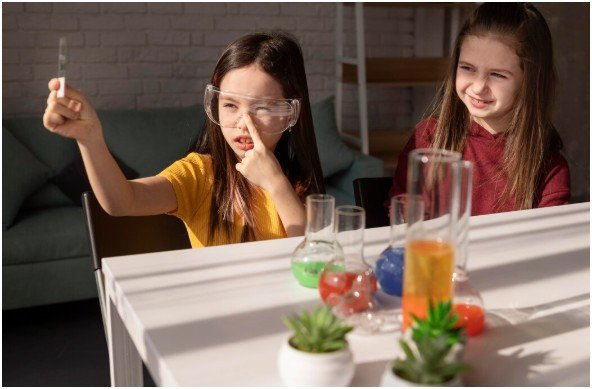
Science experiments allow children to see concepts in action. Instead of reading about chemical reactions or physics principles, kids experience them firsthand.
When children conduct experiments, they naturally begin asking questions. Curiosity encourages exploration and deeper learning.
Hands-on science activities also help develop problem-solving skills. Kids learn to make predictions, observe outcomes, and analyze results.
Using simple homeschool science experiments transforms lessons into interactive experiences that children remember long after the activity ends.
What Makes a Good Homeschool Science Experiment?
Not every science activity needs to be complicated to be effective.
A good experiment should be safe, easy to set up, and suitable for the child’s age. Household materials often work perfectly for this purpose.
Clear observation is another important factor. Children should be able to see a noticeable reaction or change during the experiment.
Finally, the experiment should encourage questions. Curiosity drives learning, and experiments that spark discussion often become the most valuable teaching tools.
Easy Simple Homeschool Science Experiments to Try
Baking Soda and Vinegar Volcano
This classic experiment demonstrates a chemical reaction.
Mix baking soda with vinegar and watch the bubbling reaction occur. The mixture releases carbon dioxide gas, creating the familiar fizzing effect.
Children quickly become fascinated by the reaction, and it provides an excellent opportunity to discuss chemical changes.
Floating Egg Experiment
This experiment introduces basic density concepts.Fill one glass with plain water and another with salt water. When you place an egg in the glasses, the egg sinks in plain water but floats in salt water.
Kids learn that salt changes water density, which affects how objects float.
Homemade Rainbow Experiment
This colorful activity helps children explore light and color.
Using a glass of water and sunlight, you can create a rainbow reflection on a nearby surface. Children observe how light bends and separates into different colors.
This experiment introduces basic principles of refraction of light.
Growing Crystal Shapes
Growing crystals at home is another fascinating science project.
Using sugar or salt solutions, children can watch crystals form over time. These simple homeschool science experiments help children understand scientific processes while having fun.
How Do Experiments Improve Learning?
Simple Science experiments for kids encourage active participation in learning.
Instead of passively listening, children become investigators. They observe changes, record results, and ask questions about what happens during the experiment.
Experiments also strengthen memory. Children often remember lessons better when they experience them directly.
Hands-on activities also build confidence. Kids feel proud when they conduct experiments successfully and explain what they observed.
How Can Parents Make Science Experiments More Engaging?

Parents can enhance experiments by encouraging discussion before and after the activity.
Before starting, ask children what they think will happen. Predictions help kids think critically about the experiment.
After the experiment, discuss what happened and why. These conversations deepen understanding and reinforce learning.
Parents can also allow children to repeat experiments with small variations. Changing ingredients or amounts can lead to new discoveries.
These strategies make simple homeschool science experiments even more valuable learning experiences.
What Safety Tips Should Parents Follow?
Safety should always be a priority during science experiments.
Parents should supervise children when using household materials that may cause spills or reactions. Protective surfaces such as trays or newspapers help contain messes.
Clear instructions also help children perform experiments safely. Explaining each step before starting prevents confusion.
Choosing age-appropriate experiments ensures that activities remain safe and enjoyable for everyone.
Frequently Asked Questions
1. What age is best for homeschool science experiments?
Children can begin simple experiments as early as preschool age with proper supervision and guidance.
2. Do homeschool science experiments require special equipment?
No. Many experiments use common household items such as baking soda, vinegar, salt, or water.
3. How often should homeschool science experiments be done?
Experiments can be included weekly or whenever a science topic benefits from hands-on exploration.
4. Why are hands-on science activities important?
Hands-on experiments help children understand concepts more clearly and encourage curiosity about the world.
Making Science Part of Everyday Learning
Science does not have to remain confined to textbooks. Everyday household materials provide opportunities to explore fascinating scientific ideas.
By incorporating simple homeschool science experiments into homeschool routines, parents create engaging learning experiences that inspire curiosity.
Children who explore science through hands-on activities often develop a stronger interest in learning and discovery.
These small experiments can spark a lifelong appreciation for science and critical thinking.