
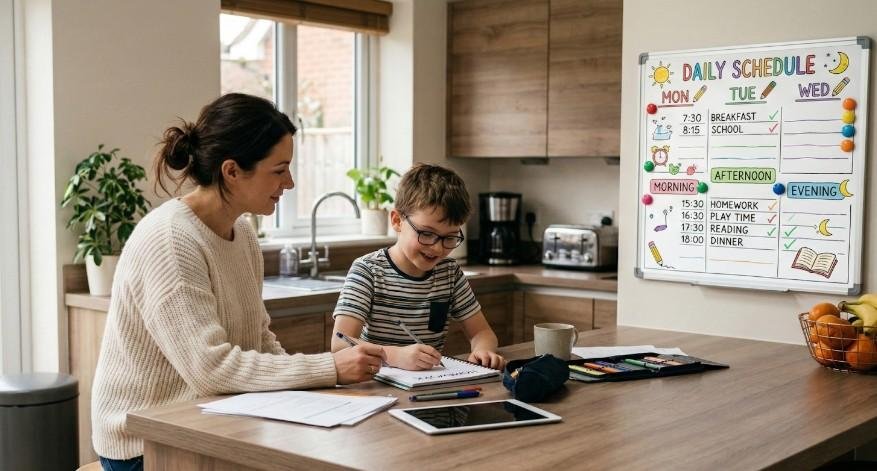
I still laugh when I remember the morning my nephew tried to pack his backpack five minutes before the school bus arrived. He ran around the house searching for homework, shoes, and a pencil all at the same time. That chaotic moment taught me something important about children and time. Kids are not naturally organized simply because they have never been taught how time works.
Many parents assume that time management develops naturally as children grow older. In reality, it is a skill that must be taught and practiced just like reading, writing, or problem solving. When kids learn how to manage time early, they develop responsibility, confidence, and independence that support them both at school and at home.
Why Time Management for Kids Matters
Teaching time management for kids provides a strong foundation for independence. When children understand how to organize their tasks and estimate how long activities take, they begin to manage responsibilities on their own. Instead of relying completely on parents for reminders, they learn to plan ahead and stay on track.
Another major benefit is reduced stress. Children who follow predictable routines know what to expect during the day. This sense of structure makes daily life feel safer and more manageable. Rather than rushing through homework or chores at the last minute, kids learn how to prepare early and finish tasks calmly.
Time management also supports academic success. Students who plan assignments and study sessions are less likely to procrastinate. They can focus better, complete work more efficiently, and maintain healthier study habits. Over time, these routines build discipline that benefits children well beyond their school years.
How Children Develop Time Awareness
Young children often struggle to understand abstract ideas like time. For them, five minutes and thirty minutes can feel exactly the same. This is why routines and visual explanations are helpful during early childhood. They transform time into something children can see and experience.
As kids grow older, their ability to plan improves. They begin to understand schedules, priorities, and deadlines. With consistent guidance, children gradually move from simple routines to more structured tools like planners, checklists, and calendars.
Strategies by Age Group
Teaching time management works best when strategies match a child’s developmental stage. Younger children benefit from visual reminders and predictable routines, while older kids can handle more advanced planning systems.
Parents often see the greatest progress when habits are introduced gradually. Instead of expecting children to manage everything at once, focus on building small routines step by step.
Preschool (Ages 3–5): Making Time Visible

Young children learn best through visual and physical experiences. Picture schedules showing activities such as breakfast, getting dressed, playtime, and bedtime help children understand what comes next in their day.
Another helpful strategy is using “when then” language. For example, parents might say, “When your toys are cleaned up, then we can read a story.” This simple phrasing connects responsibilities with rewards in a way young children easily understand.
Timers also help make time visible. Sand timers or colorful visual timers allow children to watch time passing. Seeing time move gives them a clearer sense that activities have limits and endings.
Elementary School (Ages 6–11): Building Awareness
Elementary school children are ready to develop stronger awareness of time. One effective method is time estimation. Ask your child how long they think homework or chores will take, then measure the activity together and compare the result. This helps children learn how long tasks realistically require.
Another strategy is the A-B-C prioritization method. Tasks labeled A must be completed first, B tasks come next, and C tasks can wait until later. This simple system helps children understand how priorities work.
Checklists also become powerful tools at this stage. Instead of parents repeating reminders, children can track their own responsibilities. Crossing tasks off a list provides a sense of progress and accomplishment.
Middle and High School (Ages 12+): Developing Independence
Older students benefit from more advanced planning systems. Weekly planning helps teenagers see their entire schedule at once, including school assignments, extracurricular activities, and personal commitments.
Some teens benefit from structured prioritization tools such as the Eisenhower Matrix, which sorts tasks based on urgency and importance. This method teaches students to focus on what truly matters rather than reacting to everything at once.
Another useful strategy is completing the hardest task first. Many productivity experts call this “eat the frog.” Finishing the most challenging task early reduces procrastination and builds confidence for the rest of the day.
Helpful Tools for Time Management
Tools play an important role in teaching time management because they make planning easier and more visible. Simple tools often work better than complex digital systems, especially for younger children.
Parents should introduce tools gradually so children feel comfortable using them. Over time, these tools become part of everyday routines.

The Pomodoro Technique
The Pomodoro technique works well for homework sessions. Children focus on one task for twenty-five minutes and then take a short five-minute break. This rhythm helps maintain concentration while preventing mental fatigue.
Many students find this approach motivating because work feels more manageable when broken into smaller time blocks.
Time Blocking
Time blocking assigns specific periods of the day to certain activities. For example, homework might always happen from four to five in the afternoon. Clear scheduling reduces decision fatigue and helps children know exactly what to do next.
Screen Time Boundaries
Technology can easily disrupt routines if limits are unclear. Establishing device-free periods helps protect homework time and healthy sleep schedules.
Many families set a technology bedtime thirty to sixty minutes before sleep. Turning off devices during this period allows children to relax and prepare for rest.
Shared Family Calendars

A shared family calendar helps everyone stay organized. Whether it is a kitchen whiteboard or a digital calendar, seeing schedules in one place reduces confusion.
Children also learn responsibility when they contribute to the family calendar by writing down sports practices, school events, and assignment deadlines.
Teaching Time Management Step by Step
Teaching time management works best when parents introduce habits gradually. Begin by identifying the time of day when your child struggles most. For many families, this might be morning routines or homework time.
Next, create a simple structure around that problem area. For example, homework might begin at the same time each day and be completed in short focus sessions. Explain the routine clearly and practice it together for several days.
As your child becomes comfortable, encourage independence. Let them use planners, timers, or checklists to track their own progress. Offer support when needed but avoid constant reminders. Over time, children begin managing responsibilities more confidently.
Tips for Parents
Parents play a crucial role when teaching time management.
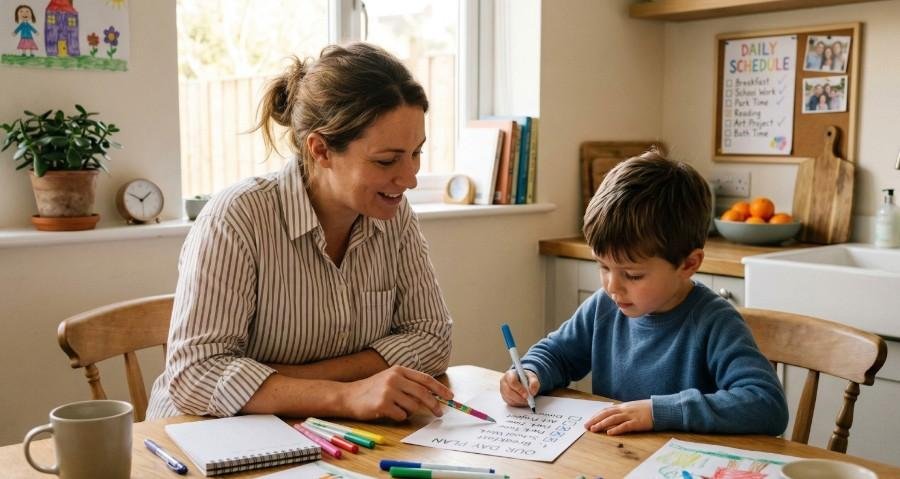
Be a coach, not a manager
Instead of controlling every step, guide children with questions and suggestions. When kids experience the natural consequences of poor planning, they learn valuable lessons.
Model strong habits
Children copy what they see. When parents use calendars, planners, and routines, kids learn how organized adults manage responsibilities.
Schedule downtime
Healthy schedules include free time as well as structured activities. Unstructured time helps children relax, explore creativity, and avoid burnout.
Frequently Asked Questions
1. What age should children start learning time management for kids?
Children can begin learning simple routines around age three or four. At this stage visual schedules and timers work well. As children grow older planners and weekly calendars help them develop stronger planning and organizational skills.
2. How can parents make time management for kids easier?
Parents can simplify time management by creating predictable daily routines and using tools like timers or checklists. Consistency helps children understand expectations and gradually develop independent planning habits.
3. Why do some children struggle with time management for kids?
Many children struggle because their executive function skills are still developing. Planning organization and prioritization improve with age and practice. Structured routines and supportive guidance help children strengthen these skills over time.
4. Can technology help with time management for kids?
Yes digital planners and calendar apps can help older children track assignments and activities. However younger kids often benefit more from visual tools like paper planners timers and wall calendars.
Final Thoughts
Learning time management does not happen overnight. It develops through daily routines, consistent practice, and patient guidance. When children understand how to plan tasks and manage responsibilities, they gain confidence and independence.
Often, the biggest improvements come from small changes. A simple routine, a visual timer, or a shared family calendar can transform chaotic mornings and stressful homework sessions. Start with one small habit today, and over time those routines can grow into lifelong skills that help children succeed in school, relationships, and future careers.